
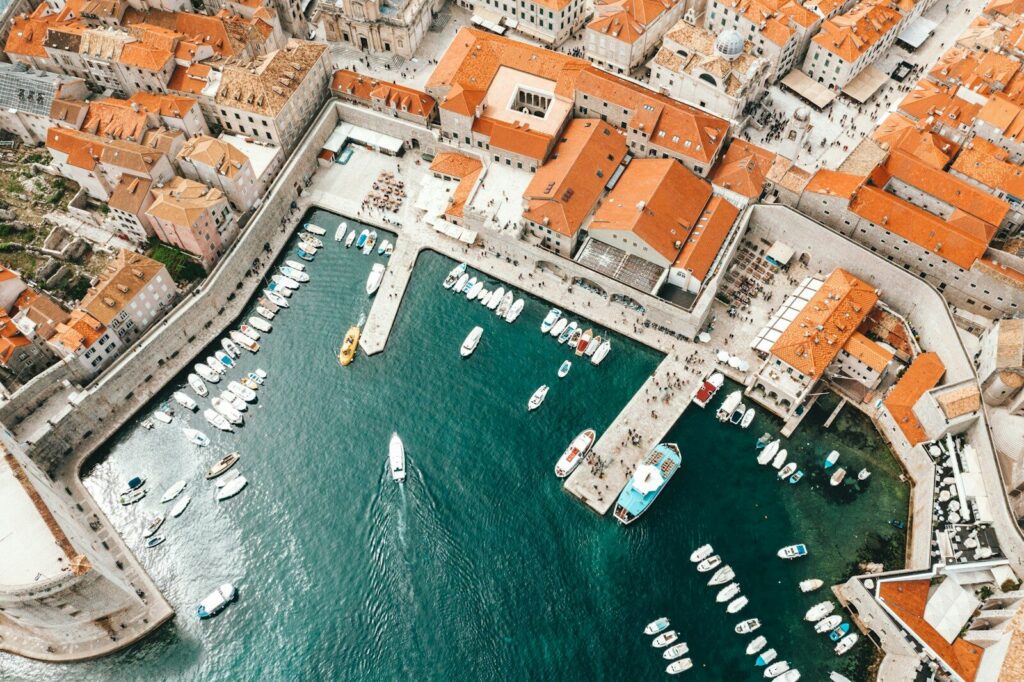
Moving to Croatia from Canada can offer an entirely different way of living. Croatia combines historic cities, Adriatic beaches, mountain landscapes, islands, vineyards, national parks, walkable communities, and access to the rest of Europe. It attracts Canadians who want to retire by the sea, work remotely, accept local employment, establish a business, study, join family members, or reconnect with Croatian heritage.
The country can feel especially appealing to people looking for a slower pace of life, warmer coastal weather, outdoor recreation, and close connections between communities. Living in Croatia may allow you to spend weekends exploring islands, hiking in national parks, visiting neighbouring European countries, or enjoying cafés and waterfront promenades that form an important part of local social life.
However, moving to Croatia from Canada involves much more than choosing a beautiful coastal town and booking a flight. Canadians planning a long-term move need to understand immigration permission, residence registration, employment rules, taxes, healthcare, housing, international shipping, customs clearance, banking, language, transportation, and the practical differences between living in Canada and Croatia.
Croatia is a member of both the European Union and the Schengen Area. Canadian citizens can generally enter for short visits without obtaining a traditional short-stay visa in advance, but visa-free entry does not give them the right to live or work in Croatia permanently. Short stays across the Schengen Area are generally limited to 90 days in any 180-day period. Longer stays require an appropriate temporary residence, residence and work permit, family-based status, digital nomad permission, study authorization, or another qualifying legal basis. (mup.gov.hr)
A successful move begins with detailed preparation. Before shipping your furniture or signing a Croatian lease, identify the immigration route that genuinely matches your plans. Create a realistic financial budget, research potential destinations, arrange the required documents, understand your Canadian and Croatian tax obligations, and choose an international mover with experience handling household relocations to Europe.
This guide covers the major issues Canadians should consider when moving to Croatia, including visas, work permits, digital nomad residence, housing, shipping, customs, healthcare, taxes, employment, schools, transportation, pets, cultural adjustment, and the steps required after arrival.
Why Move to Croatia from Canada?
Croatia offers a combination of lifestyle, geography, history, climate, and European access that can be difficult to find elsewhere.
The country has an extensive Adriatic coastline, more than a thousand islands and islets, historic fortified cities, mountain regions, agricultural communities, and modern urban centres. A person living in Zagreb will have a very different experience from someone living in Split, Dubrovnik, Zadar, Rijeka, Osijek, or a small island community.
Common reasons Canadians consider moving to Croatia include:
- Retirement near the Adriatic coast
- Remote work
- Digital entrepreneurship
- Local employment
- Starting or investing in a business
- Studying at a Croatian university
- Joining a spouse or family member
- Reconnecting with Croatian ancestry
- Lower housing costs outside premium tourist areas
- A warmer coastal climate
- Access to European travel
- Outdoor recreation
- A slower pace of life
- A desire for greater community connection
Croatia’s location makes it possible to reach Slovenia, Italy, Austria, Hungary, Bosnia and Herzegovina, Serbia, and Montenegro relatively easily. Flights and ferries also connect Croatian cities and islands to other European destinations.
The country uses the euro and has been fully integrated into the Schengen Area since January 1, 2023, simplifying travel between Croatia and many other participating European countries. (Government of Croatia)
Croatia can be more affordable than Toronto, Vancouver, or some other major Canadian cities, but it should not automatically be described as inexpensive. Housing costs in Dubrovnik, Split, Hvar, parts of Zagreb, and popular coastal communities can be high. Long-term rental supply may be limited in destinations where property owners prefer short-term tourist rentals.
Local wages may also be considerably lower than Canadian salaries. The affordability of living in Croatia therefore depends heavily on whether you earn local wages, work remotely for a foreign employer, receive retirement income, own your home, or rely on savings and investments.
Choosing Where to Live in Croatia
Croatia is divided into regions that differ in climate, employment, tourism, housing, transportation, and daily lifestyle.
The best place to live depends on:
- Your immigration route
- Employment
- Remote work requirements
- Housing budget
- Climate preferences
- Healthcare needs
- Language ability
- Access to schools
- Airport connections
- Transportation
- Interest in coastal or inland living
- Tolerance for tourism
- Need for year-round services
Do not choose a destination solely because it was enjoyable during a summer holiday. Many coastal communities feel completely different in January than in July. Restaurants, ferry routes, shops, and entertainment options may operate seasonally.
Whenever possible, rent temporarily and experience the area before buying property or committing to a long lease.
Moving to Zagreb
Zagreb is Croatia’s capital and largest city. It is the country’s main centre for government, finance, education, technology, professional services, media, healthcare, culture, and corporate employment.
Zagreb may be the most practical option for Canadians who need:
- A broad employment market
- Major hospitals
- Universities
- International schools
- Public transportation
- Government offices
- Professional services
- Year-round entertainment
- Airport access
The city offers neighbourhoods ranging from historic central districts to modern residential areas and suburban communities.
Central neighbourhoods may appeal to people who want walkability, cafés, museums, restaurants, and access to trams. Outer neighbourhoods may provide more space, quieter streets, parking, and lower rental costs.
Zagreb experiences four distinct seasons. Summers can be hot, while winters can be cold, foggy, and occasionally snowy. Canadians should not expect a Mediterranean climate in the capital.
The city was affected by earthquakes in 2020, and anyone renting or buying older property should carefully investigate structural condition, renovation history, and legal documentation.
Zagreb may feel less tourist-oriented than the coast and may offer a more stable year-round lifestyle. However, air quality, traffic, summer heat, and the condition of older housing are factors to consider.
Moving to Split
Split is one of Croatia’s largest coastal cities and a major transportation, tourism, commercial, and educational centre in Dalmatia.
The city offers:
- Adriatic beaches
- Historic architecture
- Ferry connections
- Restaurants and cafés
- Universities
- Tourism employment
- Regional healthcare
- Airport access
- Nearby islands
- A large international population during summer
Split can be attractive to retirees, remote workers, hospitality professionals, and people seeking a coastal lifestyle without living in a small resort town.
Housing is a major challenge. Many centrally located apartments are used for short-term rentals during summer, limiting the supply of stable year-round leases. Some landlords offer accommodation only outside the tourist season and expect tenants to leave before summer.
When evaluating a rental, ask whether it is genuinely available for a full year and whether the tenancy agreement reflects that commitment.
Split can become extremely crowded during peak season. Traffic, parking, noise, and high summer temperatures can affect daily life.
Outside summer, the city is quieter but still has more year-round services than many smaller coastal communities.
Moving to Dubrovnik
Dubrovnik is one of Croatia’s most famous destinations. Its historic walls, architecture, coastline, and international recognition make it attractive to visitors and potential residents.
However, living in Dubrovnik is different from visiting.
Housing can be expensive, particularly near the historic centre and popular coastal districts. Tourism dominates much of the local economy, and the city can become heavily crowded when cruise ships and large visitor groups arrive.
Employment opportunities are concentrated in:
- Tourism
- Hospitality
- Restaurants
- Transportation
- Property management
- Services
- Cultural activities
- Public administration
The historic Old Town contains stairs, narrow lanes, and restrictions that can make moving furniture, parking, and accessibility difficult.
Dubrovnik may suit people with secure remote income, established businesses, local family ties, or specialized employment. It may be less suitable for newcomers seeking inexpensive housing or a broad local job market.
Moving to Zadar
Zadar offers a balance of historic city living, coastal access, tourism, transportation, and a smaller scale than Split.
The city has:
- A walkable historic centre
- Beaches
- Ferry connections
- Regional healthcare
- An airport
- Universities
- Restaurants
- Nearby islands
- Access to national parks
Zadar may appeal to remote workers, retirees, families, and people who want access to the Adriatic without the size and intensity of Split.
Housing costs vary widely. Properties near the waterfront, historic centre, or desirable beaches can be expensive, while outer residential districts may offer better value.
As with other coastal cities, verify whether a rental is available year-round.
Moving to Rijeka
Rijeka is a major port city in northern Croatia. It offers a more industrial, commercial, and year-round character than many heavily tourist-oriented coastal destinations.
Important sectors include:
- Shipping
- Logistics
- Maritime services
- Manufacturing
- Education
- Healthcare
- Trade
- Tourism
- Professional services
Rijeka provides access to the Kvarner Gulf, islands, mountains, and nearby destinations such as Opatija and Krk.
The climate is generally wetter than Dalmatia, and the city’s terrain can be steep.
Rijeka may appeal to Canadians who want coastal access but prefer a working city with year-round activity rather than a seasonal resort environment.
Moving to Istria
Istria is a peninsula in northwestern Croatia known for coastal towns, hilltop villages, vineyards, olive groves, food, tourism, and proximity to Slovenia and Italy.
Popular destinations include:
- Pula
- Rovinj
- Poreč
- Umag
- Labin
- Motovun
- Pazin
Istria attracts retirees, remote workers, tourism professionals, food and hospitality entrepreneurs, and people interested in rural property.
Rovinj and other high-demand coastal towns can be expensive, particularly during tourism season. Inland Istria may provide more space and lower prices, although transportation and year-round services may be less convenient.
Italian is widely present in parts of Istria, and some municipalities are officially bilingual.
A rural property may require careful investigation of roads, utilities, septic systems, water, land boundaries, building permits, and renovation approvals.
Moving to Osijek and Eastern Croatia
Osijek is one of Croatia’s largest inland cities and an important centre for education, agriculture, technology, healthcare, commerce, and public administration.
Eastern Croatia may offer:
- Lower housing costs
- More space
- Less tourism
- Strong agricultural traditions
- Year-round communities
- Access to nature
- A slower pace of life
The region experiences hot summers and cold winters.
Local salaries may be lower, and employment options can be more limited than in Zagreb. Remote workers, entrepreneurs, people with family connections, and those seeking affordable property may find the region attractive.
Other eastern destinations include Vukovar, Slavonski Brod, Vinkovci, and Đakovo.
Moving to a Croatian Island
Croatia’s islands are among its most attractive destinations, but island living requires realistic planning.
Popular islands include:
- Hvar
- Brač
- Korčula
- Krk
- Cres
- Lošinj
- Pag
- Rab
- Vis
- Mljet
Island life may provide:
- Beaches
- Nature
- Smaller communities
- Boating
- Fishing
- Tourism
- Outdoor living
- A quieter lifestyle
Challenges can include:
- Seasonal ferry schedules
- Limited specialist healthcare
- Reduced employment
- High summer housing costs
- Limited winter services
- Shipping complications
- Weather-related transportation disruptions
- Smaller grocery and retail selection
Krk has a bridge connection to the mainland, which can simplify transportation. Other islands depend more heavily on ferries.
Before relocating, spend time on the island in winter. A lively summer destination may become extremely quiet outside the tourism season.
Can Canadians Move to Croatia Without a Visa?
Canadian citizens can generally enter Croatia for short stays without obtaining a short-stay visa in advance. However, the Schengen limit generally allows only up to 90 days in any 180-day period across the entire Schengen Area, not 90 days separately in each country. (mup.gov.hr)
A Canadian who wants to live in Croatia beyond the permitted short stay must obtain an appropriate residence status.
Temporary stay can be granted for purposes including:
- Family reunification
- Secondary education
- University studies
- Scientific research
- Humanitarian grounds
- Life partnership
- Employment
- Posted work
- Digital nomad activity
- Other qualifying purposes
Croatia’s Ministry of the Interior identifies temporary stay, work, family reunification, study, research, and digital nomad residence among the available legal bases for third-country nationals. (mup.gov.hr)
Because Canadians are generally visa-exempt for short entry, they may in certain situations submit a first temporary-stay application at a Croatian police administration or police station based on their intended place of stay. Applicants may also apply through a Croatian diplomatic mission or consular post. (mup.gov.hr)
The ability to apply after arrival does not mean approval is automatic. Applicants must satisfy the requirements for the specific residence category.
Temporary Residence in Croatia
Temporary residence is generally granted for a particular legal purpose.
Depending on the category, applicants may need to provide:
- Valid passport
- Proof of purpose
- Proof of financial means
- Health insurance
- Proof of accommodation
- Criminal record certificate
- Passport photographs
- Completed forms
- Certified translations
- Administrative fee payment
A first-time applicant may need to provide proof that they have not been convicted of criminal offences in Canada or in another country where they recently resided. (mup.gov.hr)
Documents issued in Canada may need to be apostilled and translated into Croatian by an authorized translator.
Temporary residence must remain connected to the approved purpose. If the underlying employment, family relationship, study program, or other basis ends, the residence status may be affected.
Residents also need to comply with address-registration requirements. Croatia’s Ministry of the Interior states that temporary residence addresses generally must be reported to the competent police administration or station within the required period after entry or approval. (mup.gov.hr)
Croatia’s Digital Nomad Residence
Croatia offers temporary residence for qualifying digital nomads.
This route is intended for third-country nationals who work through communication technology for a foreign employer or for their own company registered outside Croatia and who do not perform work for Croatian employers.
Applicants generally need to demonstrate:
- Remote work activity
- Employment or business relationship outside Croatia
- Sufficient financial resources
- Health insurance
- Valid travel document
- Accommodation
- Criminal record documentation
- Completed application
The Croatian Ministry of the Interior provides an online process and detailed information for digital nomad applications. It also states that a new digital nomad stay application can generally be submitted six months after the expiry of a previously granted digital nomad temporary stay. (mup.gov.hr)
Financial requirements can change, so applicants should verify the current monthly or lump-sum threshold directly with the Ministry of the Interior.
A digital nomad residence permit does not allow a person to take ordinary employment with a Croatian company unless separate work authorization is obtained.
Remote workers should also seek tax and social-security advice. Immigration permission and tax residence are different legal issues. A person may be allowed to live in Croatia as a digital nomad while still becoming subject to Croatian reporting or tax obligations depending on the length and structure of the stay.
Residence and Work Permits
Canadians who want to work for a Croatian employer generally need a residence and work permit or another applicable authorization.
Croatia describes the residence and work permit as a single permit allowing a third-country national to stay and work in the country. Foreign nationals may generally work only in the role and for the employer covered by their authorization. (Government of Croatia)
The employer may need to complete a labour-market test or obtain an opinion from the Croatian Employment Service. Certain high-demand professions and other specified circumstances may be exempt from parts of this process. (Government of Croatia)
Employment-based documentation may include:
- Employment contract
- Employer information
- Job description
- Qualifications
- Passport
- Proof of accommodation
- Criminal record certificate
- Application forms
- Administrative fees
The work authorization may be tied to a specific employer and position. A worker should not assume they can freely change jobs without updating or replacing the permit.
Highly Qualified Workers and the EU Blue Card
Highly qualified Canadians may be eligible for an EU Blue Card or another specialized residence and work route.
This may apply to professionals with:
- Advanced education
- Specialized qualifications
- A qualifying employment contract
- Salary above the applicable threshold
- Work in a skilled occupation
Croatian authorities publish separate information regarding highly qualified third-country nationals, including current administrative procedures and residence-card fees. (mup.gov.hr)
The EU Blue Card can offer advantages for skilled professionals and may support mobility within the European Union under applicable conditions.
Requirements can change, so applicants should confirm the current education, salary, contract-length, and documentation criteria.
Self-Employment and Starting a Business
Canadians may be able to establish a Croatian company or pursue self-employment, but business ownership does not automatically guarantee residence.
The immigration, company-law, tax, capital, employment, and business-plan requirements must be reviewed together.
Potential business structures may include:
- Limited liability company
- Simple limited liability company
- Sole proprietorship
- Craft or trade registration
- Professional practice
- Branch of a foreign company
The correct structure depends on:
- Type of activity
- Expected revenue
- Number of owners
- Employees
- Liability
- Tax treatment
- Capital
- Licensing
- Residence plans
A Canadian corporation managed from Croatia may create tax issues involving permanent establishment, corporate residency, payroll, or management and control.
Entrepreneurs should consult Croatian legal, accounting, immigration, and tax professionals before signing leases, investing capital, or hiring workers.
Studying in Croatia
Canadian students accepted into Croatian universities, colleges, research institutions, secondary schools, or qualifying educational programs may apply for temporary residence for study.
Documents may include:
- Admission letter
- Passport
- Proof of tuition or enrolment
- Proof of financial resources
- Health insurance
- Accommodation
- Criminal record certificate
- Application form
Croatia has universities in Zagreb, Split, Rijeka, Osijek, Zadar, Dubrovnik, Pula, and other cities.
Some programs are offered in English, especially in medicine, business, engineering, tourism, and international studies. However, the availability of English-language courses varies.
Students should confirm:
- Language of instruction
- Degree recognition
- Tuition
- Housing
- Work rights
- Health coverage
- Residence renewal requirements
Family Reunification
Temporary residence may be available to qualifying family members of Croatian citizens, European Economic Area citizens, or lawful third-country residents.
Potentially qualifying relationships may include:
- Spouse
- Common-law or life partner
- Child
- Parent
- Dependent family member
Applicants may need:
- Marriage certificate
- Birth certificate
- Proof of partnership
- Sponsor’s identification
- Sponsor’s residence status
- Accommodation
- Financial resources
- Insurance
- Criminal record documentation
Family reunification rules differ according to the sponsor’s citizenship and residence category. The Croatian Ministry of the Interior publishes specific requirements for family reunification. (mup.gov.hr)
Croatian Citizenship by Descent
Some Canadians may have Croatian parents, grandparents, or other family connections and may wish to explore citizenship by descent.
Citizenship law is separate from temporary residence and should be evaluated carefully.
Applicants may need to prove:
- Croatian ancestry
- Family relationships
- Birth records
- Marriage records
- Name changes
- Ancestor’s citizenship
- Emigration history
- Identity
Historical records may be located in Croatian municipal archives, churches, Canadian vital-statistics offices, or immigration records.
Citizenship applications can be document-intensive, particularly when names were changed or recorded differently after immigration to Canada.
Do not assume eligibility solely because a distant ancestor lived in Croatia. Obtain professional guidance or review the current citizenship requirements through Croatian authorities.
Long-Term Residence and Permanent Stay
Croatia distinguishes between temporary stay, long-term residence, and permanent stay.
Long-term residence may generally be granted to a third-country national who has legally and continuously resided in Croatia for five years, subject to additional requirements and permitted absence limits. (mup.gov.hr)
Applicants may need to demonstrate:
- Continuous lawful residence
- Financial resources
- Health insurance
- Knowledge of Croatian language and Latin script
- Compliance with immigration rules
- No public-order or security concerns
Not every type of temporary stay counts in the same way toward long-term residence. Study, digital nomad residence, seasonal work, and other categories may have special treatment.
Anyone planning permanent settlement should obtain advice early so they understand whether their chosen residence route builds toward long-term status.
Preparing Canadian Documents
Document preparation is one of the most important parts of moving to Croatia from Canada.
Depending on your residence category, you may need:
- Passport
- Long-form birth certificate
- Marriage certificate
- Criminal record certificate
- Employment contract
- Business records
- University admission
- Educational qualifications
- Bank statements
- Health-insurance evidence
- Medical documents
- Proof of accommodation
- Family documents
- Powers of attorney
Canadian documents may require:
- Apostille
- Croatian translation
- Certified copies
- Recent issue dates
- Original signatures
- Specific government wording
Canada joined the Apostille Convention in 2024. The authority responsible for issuing the apostille depends on which Canadian government issued or notarized the document.
Do not request documents too early if Croatia requires them to have been issued within a particular period.
Keep digital copies, paper copies, apostilles, translations, and payment receipts in an organized relocation folder.
How Much Does It Cost to Move to Croatia from Canada?
The cost of moving depends on:
- Canadian departure city
- Croatian destination
- Family size
- Visa or residence category
- Shipment volume
- Housing
- Temporary accommodation
- Pets
- Insurance
- Storage
- Legal and professional advice
- Travel season
A single remote worker travelling with luggage may have a relatively modest moving budget. A family shipping the contents of a large Canadian home could spend a substantial five-figure amount.
Your budget may include:
- Passport renewal
- Criminal record checks
- Apostilles
- Croatian translations
- Residence applications
- Work-permit fees
- Legal advice
- Tax advice
- Health insurance
- Flights
- Extra baggage
- Pet transportation
- Professional packing
- Sea freight
- Air freight
- Customs clearance
- Marine insurance
- Storage
- Temporary accommodation
- Rental deposit
- Advance rent
- Utility setup
- Furniture
- Transportation
- School costs
- Emergency savings
Do not judge affordability solely by comparing restaurant prices or holiday accommodation with Canadian costs.
Long-term housing, local salaries, taxation, insurance, utilities, vehicles, and seasonal price changes have a greater effect on daily affordability.
International Moving Costs to Croatia
International moving costs are influenced primarily by shipment volume.
Other factors include:
- Packing
- Origin location
- Destination location
- Shipping route
- Shared or dedicated container
- Port charges
- Customs
- Storage
- Insurance
- Property access
- Seasonal demand
A move from Toronto, Montreal, Ottawa, or Halifax may follow a different route from a shipment originating in Vancouver, Calgary, Edmonton, or Winnipeg.
Delivering to Zagreb or another mainland city may be simpler than delivering to Hvar, Korčula, Vis, or another island.
Historic centres in Split, Dubrovnik, Rovinj, and other cities may have narrow streets, stairs, pedestrian zones, limited parking, or restricted delivery access. A smaller shuttle vehicle or additional labour may be required.
A professional moving survey helps estimate shipment volume and identify access challenges before pricing.
Shipping Household Goods from Canada to Croatia
Sea freight is generally the most economical option for a large household shipment.
Available services may include:
- Shared-container shipping
- Full-container shipping
- Air freight
- Excess baggage
- Courier shipping
- Storage
- Vehicle shipping
- Door-to-door delivery
Shared-Container Shipping
Shared-container shipping allows several customers to use one container.
You pay for the volume occupied by your goods.
It may be suitable for:
- Studio apartments
- One-bedroom homes
- Partial households
- Retirees
- Students
- Digital nomads
- Furnished-property moves
The main advantage is cost. The primary disadvantage is timing.
The shipment may wait for other compatible cargo before departure. Goods may also pass through a consolidation facility and a destination warehouse.
Ask the mover whether the estimated transit time begins on packing day, warehouse arrival, or vessel departure.
Full-Container Shipping
A full container is dedicated to one household.
It may be appropriate for:
- Large homes
- Families
- Substantial furniture
- Extensive personal possessions
- Customers wanting greater control over departure
Common container sizes include 20-foot and 40-foot containers.
The mover should recommend the appropriate size based on a professional inventory.
Do not assume that a large home automatically requires a full container. Decluttering and professional packing can significantly reduce volume.
Air Freight
Air freight is faster but more expensive.
It may be useful for:
- Computers
- Professional equipment
- Essential clothing
- Medication
- Children’s supplies
- Important personal items
Some families send essential possessions by air and the main shipment by sea.
Air freight can reduce the amount of luggage you carry, but weight-based pricing makes it unsuitable for most furniture and large household shipments.
What Should You Ship?
Croatian homes, especially older apartments and coastal properties, may be smaller than Canadian homes.
Before shipping furniture, consider:
- Room dimensions
- Stair width
- Elevator size
- Doorways
- Storage
- Parking
- Delivery access
- Climate
- Electrical compatibility
- Replacement cost
Items that may be worth shipping include:
- Sentimental possessions
- Artwork
- Quality furniture
- Family heirlooms
- Books
- Clothing
- Professional equipment
- Children’s possessions
- Sporting goods
- Personal collections
Items that may be better sold or donated include:
- Oversized sectional sofas
- Large Canadian appliances
- Old electronics
- Low-value furniture
- Damaged items
- Furniture that will not fit
- Items easily replaced locally
Croatia uses European electrical standards. A plug adapter changes the plug shape but does not convert voltage or frequency.
Many phones, laptops, cameras, and modern chargers support multiple voltages. Large appliances, kitchen devices, tools, and older electronics may not.
Check the manufacturer’s label before shipping any electrical item.
Packing for an International Move
International household goods are handled more frequently than items in a local move.
They may travel by truck, warehouse, port, container vessel, customs facility, and destination vehicle.
Professional export packing may include:
- Double-walled cartons
- Protective furniture wrap
- Moisture-resistant materials
- Mattress covers
- Wardrobe cartons
- Reinforced tape
- Foam
- Corner protectors
- Custom crates
- Protective blankets
Fragile goods, art, antiques, instruments, mirrors, marble, and high-value electronics may need custom crating.
Owner-packed cartons may receive limited insurance coverage. Ask how self-packing affects liability and claims.
Preparing a Household Inventory
A complete inventory is essential for customs, insurance, tracking, and delivery.
Number every carton and describe its contents clearly.
Avoid descriptions such as:
- Miscellaneous
- Household goods
- Personal things
- Various items
Use clearer descriptions such as:
- Used clothing
- Kitchen utensils
- Books
- Bedding
- Family photographs
- Children’s toys
- Decorative items
- Used tableware
- Office files
Create a separate list for high-value belongings.
Take photographs and preserve:
- Purchase receipts
- Appraisals
- Serial numbers
- Model numbers
- Existing-condition photographs
Items to Keep With You
Do not pack essential documents in a sea container.
Carry or securely control:
- Passport
- Residence documents
- Work authorization
- Birth certificates
- Marriage certificates
- Criminal record documents
- Medication
- Medical records
- Banking information
- Jewellery
- Employment records
- School documents
- Insurance policies
- Customs paperwork
- Laptops
- Chargers
- Irreplaceable photographs
Plan to live without the main shipment for several weeks or longer.
Customs Clearance in Croatia
Household goods entering Croatia from Canada are entering the customs territory of the European Union.
Used personal belongings transferred as part of a genuine change of residence may qualify for relief from customs duties and import taxes when the applicable conditions are met.
Eligibility may depend on:
- Residence outside the EU before the move
- Length of prior residence
- Ownership and use of the goods
- Personal rather than commercial use
- Timing of import
- Continued ownership after import
- Proof of relocation
- Accurate inventory
Your mover or customs representative may request:
- Passport
- Residence approval
- Proof of Croatian address
- Proof of Canadian residence
- Employment or retirement documents
- Packing inventory
- Shipping documents
- Customs declaration
- Proof of ownership
- Authorization for the customs broker
New goods, commercial products, vehicles, alcohol, tobacco, and certain restricted products may be treated separately.
Do not assume personal belongings will clear automatically. Incomplete documents can lead to storage charges, customs inspections, and delayed delivery.
Prohibited and Restricted Goods
Never include hazardous or prohibited goods without written confirmation.
Restricted categories may include:
- Firearms
- Ammunition
- Explosives
- Fireworks
- Fuel
- Gas cylinders
- Paint
- Aerosols
- Chemicals
- Illegal drugs
- Certain medicines
- Plants
- Seeds
- Soil
- Meat and dairy products
- Perishable food
- Protected wildlife products
- Counterfeit goods
Croatian customs publishes specific guidance for medicines and controlled substances. It states that prepared medicine for a traveller’s personal needs is generally permitted only in quantities necessary for treatment for up to one month, accompanied by appropriate medical documentation. (carina.gov.hr)
Prescription medication should usually travel with you rather than in the household container.
Moving Pets to Croatia
Dogs, cats, and ferrets entering Croatia from Canada must comply with European Union animal-entry requirements.
The process may involve:
- Microchip
- Rabies vaccination
- Veterinary certificate
- Health examination
- Approved travel route
- Entry-point inspection
- Airline-compliant crate
- Supporting documentation
Croatian customs officers perform official controls on pets entering the European Union from third countries. (carina.gov.hr)
The timing of the microchip and rabies vaccination is important. Begin planning months before departure.
Pet-relocation costs may include:
- Veterinary appointments
- Microchipping
- Vaccination
- Health certificate
- Crate
- Airline fees
- Cargo handling
- Ground transportation
- Boarding
- Pet-friendly accommodation
Before signing a lease, confirm that the landlord permits pets.
Consider the animal’s ability to adapt to:
- Apartment living
- Stairs
- Elevators
- Summer heat
- Limited outdoor space
- Long flights
- Ferry travel
- Seasonal crowds
International Moving Insurance
Marine transit insurance can help protect your household goods during the move.
Available coverage may include:
- Total-loss protection
- Declared-value coverage
- Replacement-value coverage
- High-value item coverage
- Limited owner-packed coverage
Read the policy carefully.
Confirm:
- Deductible
- Valuation method
- Exclusions
- Storage coverage
- Moisture exclusions
- Mould exclusions
- Claim deadline
- Evidence requirements
- Coverage for pairs and sets
- Coverage for owner-packed cartons
Declare belongings honestly. Underinsurance can reduce a settlement.
Do not place cash, passports, financial instruments, jewellery, or irreplaceable documents in the shipment.
Finding Housing in Croatia
Housing can be challenging, particularly in coastal cities and tourist destinations.
Rental markets in Zagreb, Split, Dubrovnik, Zadar, Rijeka, Rovinj, and island communities vary significantly.
Landlords may request:
- Passport
- Residence evidence
- Employment contract
- Proof of income
- Bank statements
- Security deposit
- Advance rent
- Guarantor
- Personal identification number
Newcomers without Croatian income or local rental history may be asked to demonstrate substantial savings or pay additional rent in advance.
Temporary accommodation gives you time to inspect properties and understand neighbourhoods.
Understanding Croatian Rental Listings
Common Croatian terms include:
- Stan: apartment
- Kuća: house
- Soba: room
- Namješten: furnished
- Nenamješten: unfurnished
- Najam: rental
- Polog: deposit
- Režije: utilities or operating expenses
- Grijanje: heating
- Klima uređaj: air conditioning
- Kat: floor
- Dizalo: elevator
- Parking: parking
- Dugoročni najam: long-term rental
Ask whether the rental price includes utilities.
Utilities may cover:
- Electricity
- Water
- Gas
- Heating
- Building charges
- Waste collection
- Internet
- Television
Request previous bills if possible, especially for winter heating and summer air conditioning.
Seasonal Rental Problems
In popular coastal areas, some properties are rented to long-term tenants only from autumn to spring.
The landlord may expect the tenant to leave when the summer tourism season begins.
A listing may describe the apartment as available long-term while the contract permits only a limited seasonal stay.
Before paying a deposit, confirm:
- Exact tenancy dates
- Renewal rights
- Summer occupancy
- Registration of address
- Deposit-return conditions
- Notice requirements
- Utility responsibility
A proper written agreement is essential for residence registration and legal protection.
Rental Scams
New arrivals can be targeted by fraudulent listings.
Warning signs include:
- Price far below market value
- Refusal to show the property
- Pressure to send money immediately
- Landlord claiming to be overseas
- Requests for unusual payment methods
- Copied photographs
- Inconsistent addresses
- No written agreement
- Refusal to provide identification
- No proof of ownership or authority
Do not transfer money solely based on photographs or messages.
Use established agencies, verified platforms, local legal assistance, or a trusted relocation service where appropriate.
Buying Property in Croatia
Foreign nationals may be able to purchase Croatian property, but ownership does not automatically provide residence rights.
Canadian buyers should use an independent lawyer.
Before purchasing, investigate:
- Ownership title
- Land-registry records
- Building permits
- Use permits
- Legalization of additions
- Boundaries
- Access rights
- Mortgages
- Liens
- Co-ownership
- Inheritance claims
- Utility connections
- Planning restrictions
Property records can be complicated, particularly for older, inherited, rural, or coastal property.
A beautiful stone house may require major work involving:
- Roof
- Electricity
- Plumbing
- Heating
- Moisture
- Structural repairs
- Septic system
- Road access
- Conservation approval
Buying through a company or relying on another person’s name can create serious legal and tax risks.
Rent first unless you already know the region well.
Obtaining an OIB
Croatia uses a personal identification number called the OIB.
It is required for many legal, financial, and administrative activities.
You may need an OIB for:
- Banking
- Employment
- Taxes
- Property
- Utilities
- Contracts
- Insurance
- Business registration
- Healthcare administration
The OIB is not an immigration status. It is an identification number.
Apply through the appropriate Croatian tax authority or authorized process and keep the certificate safely.
Registering Your Address
Foreign residents generally need to register their address with the competent police administration or police station.
Your landlord may need to provide proof of ownership, consent, or a rental agreement.
Croatian authorities state that people granted temporary residence must report their address within the applicable period and that failure to register can affect residence status. (mup.gov.hr)
Do not accept an informal rental where the landlord refuses to permit address registration. This can interfere with immigration, banking, healthcare, and other administrative processes.
Healthcare in Croatia
Croatia has a public healthcare system and private healthcare providers.
Eligibility and contribution requirements depend on:
- Residence status
- Employment
- Social-security coverage
- Family status
- Insurance
- Bilateral arrangements
- Immigration category
Employees generally enter the Croatian health-insurance system through employment and contribution registration.
Digital nomads, retirees, students, and other residents may have different insurance requirements.
Private insurance or proof of coverage may be required during a temporary-residence application.
Before leaving Canada, obtain:
- Medical records
- Vaccination records
- Prescription list
- Diagnostic reports
- Specialist letters
- Dental records
- Vision prescriptions
- Physician’s letter
- Copies of imaging
Bring medication in original packaging and confirm whether it is available in Croatia.
Healthcare quality and availability vary. Zagreb, Split, Rijeka, and Osijek have major hospitals and specialist services. Islands and rural communities may have limited local care and require travel to the mainland or a regional centre.
Provincial Canadian Healthcare
Canadians should not assume their provincial health coverage will continue indefinitely after moving abroad.
Each province has residency requirements and limits on absence.
Contact your provincial health authority before departure.
Private travel insurance is not always suitable for permanent residence. Review:
- Emergency coverage
- Routine care
- Hospitalization
- Chronic conditions
- Prescriptions
- Repatriation
- Waiting periods
- Exclusions
- Geographic limits
Taxes When Moving to Croatia
Cross-border tax planning should begin before the move.
Croatian tax residence may depend on:
- Time spent in Croatia
- Permanent home
- Family location
- Economic interests
- Employment
- Business activity
- Other personal connections
Tax residents may be subject to Croatian tax on worldwide income.
Potentially relevant income and assets include:
- Canadian employment income
- Remote-work income
- Pension income
- Rental income
- Dividends
- Interest
- Capital gains
- Registered accounts
- Corporations
- Trusts
- Property
- Business income
- Cryptocurrency
A Canadian account does not make income exempt from Croatian tax.
Canadians leaving Canada may also need to consider:
- Departure date
- Residential ties
- Departure tax
- Non-resident withholding
- Canadian rental property
- Canadian corporations
- Pensions
- Investments
- Registered accounts
- Provincial obligations
Canada and Croatia have an income tax treaty, but treaty protection does not eliminate the need to file returns or report income where required.
Consult a tax professional familiar with both countries before establishing Croatian residence.
Remote Work and Tax
Remote workers often assume that being paid by a Canadian employer means they remain taxable only in Canada.
That may be incorrect.
Factors can include:
- Physical location where work is performed
- Length of stay
- Tax residence
- Employer obligations
- Permanent establishment
- Payroll
- Social security
- Corporate management
- Client location
A Canadian company may face Croatian obligations if an employee or owner regularly conducts business from Croatia.
Digital nomads, contractors, consultants, and company owners should obtain advice before relocating.
Opening a Croatian Bank Account
A Croatian bank account may be useful for:
- Rent
- Salary
- Utilities
- Taxes
- Insurance
- Direct debits
- Local payments
Banks may request:
- Passport
- OIB
- Residence permit
- Proof of address
- Employment contract
- Source-of-funds evidence
- Tax residence information
- Canadian tax identification
Fees vary.
Compare:
- Monthly account charges
- Debit-card fees
- ATM access
- Transfers
- Online banking
- Foreign-exchange margins
- English-language support
Keep a Canadian account for remaining obligations, tax payments, pensions, investments, property, and refunds.
Transferring Money
When transferring savings from Canada, compare the total amount received after:
- Exchange-rate margin
- Transfer fee
- Receiving fee
- Intermediary charges
- Transfer limits
- Processing time
Verify all banking instructions through a second communication channel before transferring a property deposit or large rental payment.
Fraudsters can intercept email and replace legitimate payment details.
Working in Croatia
Employment opportunities vary by region and industry.
Potential sectors include:
- Tourism
- Hospitality
- Technology
- Construction
- Healthcare
- Engineering
- Manufacturing
- Logistics
- Shipping
- Education
- Customer support
- Finance
- Agriculture
- Energy
- Maritime services
Tourism and hospitality employment can be seasonal.
Zagreb generally has the broadest professional market. Split, Dubrovnik, Zadar, Pula, and coastal communities have more tourism-related roles. Rijeka offers maritime and industrial opportunities, while Osijek has education, agriculture, technology, and regional services.
Croatian-language ability significantly improves employment prospects.
English-speaking opportunities are more common in:
- Multinational companies
- Technology
- International customer support
- Tourism
- Private education
- Remote work
Professional Credential Recognition
Regulated occupations may require recognition of Canadian qualifications.
This can apply to:
- Medicine
- Nursing
- Dentistry
- Pharmacy
- Teaching
- Law
- Engineering
- Architecture
- Psychology
- Social work
Applicants may need:
- Diploma
- Transcripts
- Course descriptions
- Professional registration
- Employment references
- Criminal record certificate
- Croatian translations
- Exams
- Language evidence
Begin early. Immigration approval does not automatically provide permission to practise a regulated profession.
Learning Croatian
Many Croatians speak English, particularly younger people, tourism workers, and professionals in major cities.
However, Croatian is essential for deeper integration.
Learning Croatian helps with:
- Government offices
- Healthcare
- Housing
- Employment
- Banking
- Schools
- Neighbours
- Shopping
- Emergencies
- Local friendships
Croatian grammar can be challenging for English speakers, but practical progress is possible.
Begin with:
- Greetings
- Numbers
- Dates
- Addresses
- Transportation
- Housing
- Medical vocabulary
- Documents
- Shopping
- Emergencies
Even basic effort is often appreciated.
Moving with Children
Families should research schools before selecting housing.
Croatia offers:
- Public schools
- Private schools
- International schools
- Bilingual programs
- Religious schools
- Preschools
- Universities
Public education is primarily in Croatian.
International schools are concentrated in Zagreb and selected larger cities. Tuition can be expensive.
Bring:
- Birth certificates
- Passports
- Vaccination records
- School reports
- Transcripts
- Special-education documentation
- Custody records
- Certified translations
School enrolment may depend on residence and local administrative procedures.
Children may learn Croatian quickly, but adjustment can still involve homesickness, academic differences, and social challenges.
Maintain familiar routines and encourage participation in sports, music, clubs, and community activities.
Transportation in Croatia
Transportation options include:
- Buses
- Trams
- Trains
- Ferries
- Domestic flights
- Taxis
- Rideshare services
- Private vehicles
Zagreb has an extensive tram and bus system.
Intercity buses are important because rail service does not reach every destination efficiently.
Ferries are essential for islands and coastal travel.
A car may be unnecessary in central Zagreb, Split, Rijeka, or another well-connected city, but it can be valuable in rural areas, inland Istria, islands, and smaller coastal communities.
Driving in Croatia
Canadians should verify current rules for using or exchanging a Canadian licence.
Requirements can depend on:
- Province of issuance
- Residence status
- Length of stay
- Licence category
- Validity
- Translation or international permit
Driving conditions vary.
You may encounter:
- Narrow coastal roads
- Mountain routes
- Tolls
- Limited historic-centre access
- Small parking spaces
- Ferry boarding
- Heavy summer traffic
- Snow in inland regions
- Strong coastal winds
Vehicle expenses include:
- Purchase
- Insurance
- Registration
- Inspection
- Fuel
- Tolls
- Parking
- Maintenance
- Taxes
Shipping a Canadian car is often impractical because of freight, customs, compliance, registration, and resale considerations.
Climate and Weather
Croatia has several climate zones.
The Adriatic coast has hot, dry summers and milder winters. Zagreb and inland Croatia have colder winters and hotter continental summers. Mountain regions receive substantial snow.
Canadians should prepare for:
- Intense summer heat
- Strong sun
- Limited air conditioning in some homes
- Coastal humidity
- Winter dampness
- Bora winds
- Heavy rain
- Snow inland
- Wildfire risk
- Earthquake risk in certain areas
Coastal homes may feel cold and humid during winter because of stone construction, tiled floors, limited insulation, and intermittent heating.
When viewing property, inspect:
- Heating
- Air conditioning
- Windows
- Ventilation
- Roof
- Moisture
- Mould
- Structural condition
- Seismic renovation
- Drainage
Everyday Cultural Adjustment
Croatian culture varies by region, generation, family, and community.
Canadians may notice:
- Strong café culture
- Later evening activity
- Long family meals
- Smaller retail stores
- Sunday closures
- Regional traditions
- Direct communication
- Administrative formality
- Seasonal tourism
- Strong local identity
- Emphasis on personal relationships
Government processes may require appointments, original documents, copies, stamps, and in-person visits.
Bring more paperwork than you think you need.
Patience and respectful persistence are valuable when dealing with administrative procedures.
Safety in Croatia
Canada’s travel advisory for Croatia recommends normal security precautions. It notes that violent crime is low but petty crime, including pickpocketing and purse snatching, occurs in cities, transportation hubs, restaurants, hotel areas, and tourist attractions. (Travel.gc.ca)
Practical precautions include:
- Keep bags closed
- Protect passports
- Watch phones and wallets
- Avoid leaving belongings unattended
- Verify accommodation
- Use official transportation
- Be alert in crowds
- Keep document copies
Coastal swimming, hiking, boating, heat, and remote terrain also require preparation.
A Complete Moving Timeline
Twelve Months Before Moving
Research:
- Residence routes
- Digital nomad requirements
- Employment
- Croatian regions
- Housing
- Taxes
- Healthcare
- Schools
- Shipping
- Pet requirements
Set a financial target and begin decluttering.
Nine Months Before Moving
Gather:
- Passports
- Birth certificates
- Marriage certificates
- Criminal record documents
- Employment records
- Bank statements
- Educational credentials
- Medical records
- Pet documents
Begin Croatian lessons.
Six Months Before Moving
- Confirm your residence category
- Obtain tax advice
- Request moving surveys
- Research temporary housing
- Investigate schools
- Begin apostilles and translations
- Prepare pets
- Review health insurance
- Decide what to ship
- Investigate professional recognition
Three Months Before Moving
- Submit residence applications where appropriate
- Select an international mover
- Finalize shipment inventory
- Reserve flights when appropriate
- Book temporary accommodation
- Sell unwanted furniture
- Arrange pet travel
- Notify schools and employers
- Prepare customs documents
- Obtain insurance
One Month Before Moving
- Confirm packing date
- Refill prescriptions
- Back up computers
- Redirect mail
- Notify banks
- Cancel or transfer utilities
- Prepare luggage
- Copy important documents
- Confirm destination contacts
- Review arrival appointments
Final Week
Separate everything that must not be packed.
Keep:
- Passports
- Residence approvals
- Medication
- Financial documents
- Jewellery
- Chargers
- Computers
- Customs paperwork
- Pet documents
- School records
- Travel clothing
Inspect every cupboard, garage, attic, basement, and storage unit.
First Week in Croatia
- Enter temporary accommodation
- Obtain a local phone number
- Register your address
- Attend police or residence appointments
- Contact the destination mover
- Begin housing viewings
- Apply for an OIB if needed
- Learn local transportation
- Arrange essential insurance
First Month
- Secure permanent housing
- Complete residence-card procedures
- Register for healthcare
- Open a bank account
- Set up utilities
- Enrol children
- Confirm tax and social-security obligations
- Receive the shipment
- Establish a monthly budget
Common Mistakes to Avoid
Assuming Short-Stay Entry Allows Residence
The 90-day Schengen rule is for short visits, not permanent relocation.
Applying Under the Wrong Category
Digital nomad residence, local employment, family reunification, and business residence have different rules.
Working Without Authorization
A digital nomad permit does not automatically allow local Croatian employment.
Underestimating Tax
Remote income and Canadian investments may be reportable in Croatia.
Shipping Too Much
Large Canadian furniture may not fit Croatian homes.
Choosing a Summer Rental
Some coastal properties are unavailable to long-term tenants during tourist season.
Paying an Unverified Landlord
Confirm ownership, address registration, and contract terms before transferring money.
Ignoring Heating
Coastal winters can feel cold and damp indoors.
Buying Property Too Quickly
Croatian title and permit issues can be complex.
Closing Canadian Accounts Too Early
You may still need Canadian banking for taxes, pensions, property, and refunds.
Choosing Movers Only by Price
A low quote may exclude customs, destination handling, storage, insurance, or difficult access.
Frequently Asked Questions About Moving to Croatia from Canada
Can a Canadian live permanently in Croatia?
A Canadian can establish long-term residence by qualifying for an appropriate temporary residence category and later meeting the conditions for long-term residence or permanent stay.
Croatian authorities state that long-term residence may generally be available after five years of uninterrupted legal stay, subject to applicable conditions. (mup.gov.hr)
Can Canadians work remotely from Croatia?
Eligible remote workers may apply for temporary residence as digital nomads.
They must generally work for a foreign employer or business and may not perform ordinary employment for a Croatian employer under that status.
Can Canadians work for a Croatian company?
Yes, but they generally require a residence and work permit or another valid authorization.
The permit may be tied to a specific employer and role. (mup.gov.hr)
Is Croatia cheaper than Canada?
Croatia may be more affordable in selected inland regions and smaller cities.
However, Dubrovnik, Split, Hvar, Rovinj, and premium parts of Zagreb can be expensive.
Local wages are also lower than many Canadian salaries.
How long does shipping take?
Shipping time depends on:
- Canadian origin
- Croatian destination
- Container type
- Consolidation
- Vessel route
- Customs
- Island delivery
- Port congestion
Ask for a realistic range rather than a guaranteed date.
Should I ship furniture?
Ship high-quality, sentimental, valuable, and appropriately sized furniture.
Sell or donate oversized, low-value, damaged, and incompatible items.
Can Canadians buy property in Croatia?
Canadians may be able to purchase property, but the process can involve reciprocity, approvals, tax, and legal review.
Ownership does not itself create residence rights.
Is English widely spoken?
English is common in tourism, major cities, and among younger Croatians.
Croatian remains important for government, healthcare, employment, schools, and social integration.
Can I bring my pet?
Yes, provided the pet satisfies European Union animal-entry requirements involving identification, vaccination, certification, and inspection.
Can I bring medication?
Personal medication may be permitted in limited quantities with appropriate medical documentation. Croatia’s customs guidance states that medicine for personal needs is generally limited to the amount required for up to one month of treatment. (carina.gov.hr)
Do I need private health insurance?
Many temporary-residence applicants need to demonstrate health-insurance coverage.
The exact requirement depends on residence category, employment, and access to Croatian public insurance.
Can I become a Croatian citizen?
Some residents may eventually qualify through naturalization, while others may qualify through ancestry, marriage, or special circumstances.
Citizenship requirements are separate from ordinary residence rules.
Choosing International Movers from Canada to Croatia
An experienced international moving company can coordinate:
- In-home or virtual survey
- Shipment-volume assessment
- Export packing
- Furniture disassembly
- Custom crating
- Shared-container shipping
- Full-container shipping
- Air freight
- Marine insurance
- Canadian storage
- Croatian storage
- Customs documentation
- Destination handling
- Final delivery
- Furniture reassembly
- Unpacking
- Packing-material removal
Look for a mover with experience serving Croatia and a reliable European destination network.
Ask:
- Is the quote based on a survey?
- What shipment volume is estimated?
- Is packing included?
- Is the container shared or dedicated?
- Which ports will be used?
- Are destination charges included?
- Who handles customs clearance?
- Is delivery to the final address included?
- What island charges may apply?
- Will a shuttle vehicle be required?
- Is storage available?
- What insurance options are offered?
- How will the shipment be tracked?
- Who is the Croatian destination agent?
- How are claims handled?
Compare the complete service rather than only the initial price.
Start Planning Your Move to Croatia from Canada
Moving to Croatia from Canada can create an opportunity to build a new life near the Adriatic, work remotely from Europe, join family, pursue employment, study, invest, retire, or reconnect with Croatian heritage.
The move requires preparation.
Begin by confirming the residence category that matches your actual plans. Do not assume short-stay entry permits permanent living or employment.
Build a complete budget that includes:
- Immigration
- Documents
- Flights
- Shipping
- Housing
- Insurance
- Taxes
- Pets
- Storage
- Emergency savings
Research destinations based on year-round daily life. Zagreb, Split, Dubrovnik, Zadar, Rijeka, Istria, Osijek, the islands, and rural Croatia offer very different experiences.
Declutter before requesting a final shipping quote. Measure furniture, verify electrical compatibility, and avoid transporting items that will not suit your Croatian property.
Prepare customs documentation carefully and insure valuable belongings.
Whether you are moving from Toronto to Zagreb, Vancouver to Split, Calgary to Dubrovnik, Montreal to Rijeka, Ottawa to Zadar, Edmonton to Istria, Winnipeg to Osijek, or Halifax to a Croatian island, early planning can reduce delays and unexpected costs.
There may be administrative complications, language barriers, seasonal housing challenges, and differences in employment, healthcare, taxation, and property law.
These challenges are manageable when you use accurate information and qualified professional support.
With the correct residence authorization, realistic finances, suitable housing, tax planning, accurate documentation, and an experienced international mover, you can complete your move from Canada to Croatia with confidence and begin creating a rewarding life in one of Europe’s most distinctive countries.