
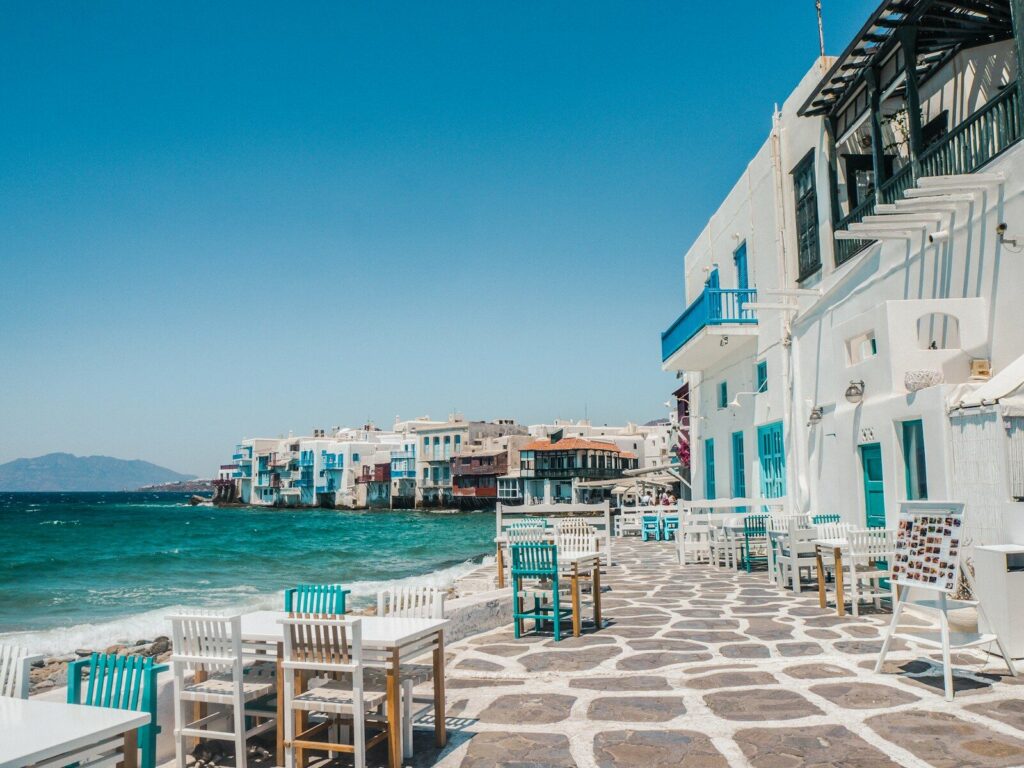
Moving to Greece from Canada can offer a dramatic change in climate, lifestyle, geography, culture, and daily routine. Greece attracts Canadians who want to retire near the Mediterranean, work remotely, accept local employment, establish a business, study, join relatives, reconnect with Greek heritage, or spend more time in a country known for its islands, beaches, historic cities, mountains, food, and strong community traditions.
For many people, the appeal of Greece begins with the climate and coastline. Long summers, outdoor dining, neighbourhood cafés, local markets, historic architecture, and access to the Aegean, Ionian, and Mediterranean seas can make everyday life feel very different from life in Canada. Greece also offers a wide range of possible destinations, from Athens and Thessaloniki to Crete, Rhodes, Corfu, the Peloponnese, and smaller inland communities.
However, moving to Greece from Canada is not the same as taking a long holiday. Permanent or long-term relocation requires careful preparation involving immigration, residence permits, housing, taxation, healthcare, banking, employment, international shipping, customs clearance, language, schools, transportation, and post-arrival administration.
Canadian citizens may generally visit Greece for short stays under the Schengen rules, but short-stay permission does not automatically provide the right to live or work there permanently. Greece distinguishes between short-term Schengen entry and national visas for stays longer than 90 days. The Greek Embassy in Canada states that travellers planning to remain for more than 90 days may need a national visa rather than a short-stay Schengen visa.
The appropriate pathway depends on why you are moving. A retiree will follow a different process from a locally employed worker, a digital nomad, a student, a financially independent resident, an entrepreneur, an investor, or a family member of a Greek or European Union citizen.
A successful move therefore begins with the legal basis for residence. Before booking international movers, signing a long lease, or shipping a household container, confirm which immigration route applies to your circumstances.
This complete guide covers the major issues Canadians should consider when moving to Greece, including visas, residence permits, housing, cost of living, taxes, healthcare, international shipping, customs, employment, education, transportation, pets, timelines, common mistakes, and choosing professional international movers.
Why Move to Greece from Canada?
Greece offers a combination of history, climate, coastline, food, community, and access to Europe that can be highly appealing to Canadians.
The country includes a large mainland, mountainous regions, major cities, rural villages, and hundreds of inhabited and uninhabited islands. The lifestyle available in central Athens is very different from life in Thessaloniki, Crete, Corfu, Rhodes, Kalamata, Patras, or a small Cycladic island.
Common reasons Canadians move to Greece include:
- Retirement
- Digital nomad work
- Remote employment
- Family reunification
- Greek ancestry
- Local employment
- Business formation
- Property ownership
- University study
- Research
- Tourism or hospitality work
- Lifestyle change
- Lower housing costs in selected areas
- Mediterranean climate
- Access to European travel
Greece can provide a more outdoor-oriented lifestyle than many parts of Canada. In coastal and southern regions, much of daily life may take place on balconies, terraces, beaches, promenades, village squares, and outdoor cafés.
Food and social life are closely connected. Meals may last longer, evenings may begin later, and local relationships can play an important role in business, housing, administration, and community integration.
Greece is also well positioned for travel. Residents can reach Italy, Cyprus, Turkey, the Balkans, Central Europe, North Africa, and other Mediterranean destinations through flights, ferries, and overland transportation.
The country uses the euro, which simplifies travel and financial transactions across much of the European Union.
Greece should not automatically be viewed as inexpensive, however. Athens, Thessaloniki, Mykonos, Santorini, parts of Crete, and other high-demand destinations can have substantial housing costs. Energy, imported goods, vehicles, private insurance, international schools, and island transportation can also be expensive.
Local wages are often lower than comparable Canadian salaries. A person earning remote Canadian income may experience Greece very differently from someone employed locally.
Choosing Where to Live in Greece
The right destination depends on your employment, budget, climate preferences, healthcare needs, transportation requirements, language ability, family situation, and tolerance for tourism.
Before choosing a city or island, evaluate:
- Long-term rental availability
- Property prices
- Local employment
- Healthcare access
- Schools
- Internet quality
- Transportation
- Airport or ferry connections
- Summer tourism
- Winter services
- Climate
- Wildfire risk
- Earthquake risk
- Water supply
- Distance from government offices
- Access to English-speaking professionals
- Need for a vehicle
A location that feels perfect during a two-week summer vacation may be quiet, windy, rainy, or isolated during winter. Some island restaurants, shops, clinics, and ferry services operate on reduced schedules outside the tourist season.
Whenever possible, rent temporarily and experience the location year-round before buying property.
Moving to Athens
Athens is Greece’s capital, largest city, principal employment centre, and main hub for government, finance, healthcare, education, culture, transportation, and international business.
Athens may be the most practical destination for Canadians who require:
- A broad job market
- Major hospitals
- Universities
- International schools
- Government offices
- International flights
- Public transportation
- Professional services
- English-speaking networks
- Year-round entertainment
The city has a metro, buses, trams, suburban rail, taxis, and access to Athens International Airport.
Neighbourhoods vary greatly in cost, character, safety, transportation, noise, and housing quality.
Central areas may offer walkability and cultural access but can have congestion, older buildings, small apartments, limited parking, and street noise. Northern and southern suburbs may offer more space, but commute times and transportation access must be considered.
The southern suburbs and Athens Riviera attract residents seeking coastal access. Areas such as Glyfada, Voula, and nearby communities can provide beaches, restaurants, and international services, but housing can be expensive.
Northern suburbs may appeal to families and professionals who want larger homes, schools, and quieter streets.
Athens summers are hot and dry. Air conditioning, window quality, building orientation, insulation, and shading are important when evaluating housing.
Winter temperatures are mild compared with most of Canada, but older apartments may still feel cold because of limited insulation and expensive or inconsistent heating.
Air pollution, traffic, parking, summer heat, and administrative complexity are some of the challenges of living in the capital.
Moving to Thessaloniki
Thessaloniki is Greece’s second-largest city and an important centre for education, trade, logistics, technology, culture, healthcare, tourism, and regional business.
The city offers:
- Universities
- Hospitals
- Restaurants
- Cultural institutions
- International communities
- Waterfront living
- Airport access
- Employment
- Lower housing costs than some parts of Athens
Thessaloniki may appeal to students, families, remote workers, professionals, and people seeking an urban lifestyle at a smaller scale than Athens.
The city is known for its food, nightlife, waterfront, and cultural events.
Winters can be colder and damper than in southern Greece, while summers can be hot and humid.
Traffic and parking can be difficult. Public transportation options continue to evolve, so the exact neighbourhood and commute should be evaluated carefully.
Moving to Crete
Crete is Greece’s largest island and one of its most popular relocation destinations.
Major cities and towns include:
- Heraklion
- Chania
- Rethymno
- Agios Nikolaos
- Sitia
- Ierapetra
Crete offers beaches, mountains, villages, agriculture, universities, healthcare, tourism, airports, and substantial year-round communities.
The island may be suitable for:
- Retirees
- Remote workers
- Tourism professionals
- Entrepreneurs
- Families
- People with Greek heritage
- Outdoor enthusiasts
Heraklion is the island’s largest city and a major administrative, educational, and commercial centre. Chania is known for its historic harbour, international community, tourism, and attractive surroundings. Rethymno offers a smaller university city with beaches and historic architecture.
Housing in popular areas has become more competitive, particularly where short-term rentals reduce long-term supply.
Rural living can provide privacy and space but may require a vehicle. Healthcare and specialist services are concentrated in the main cities.
Crete experiences hot summers and relatively mild winters, although mountain areas can receive snow. Water availability, wildfire risk, road access, and distance from medical care should be considered when buying rural property.
Moving to Corfu
Corfu is an Ionian island with a green landscape, historic architecture, beaches, international residents, and established tourism.
The island may appeal to retirees, remote workers, hospitality entrepreneurs, and people seeking a slower coastal lifestyle.
Corfu Town provides:
- Administrative services
- Healthcare
- Shops
- Restaurants
- Schools
- An airport
- Ferry connections
Other parts of the island may feel far more rural.
Corfu receives more rainfall than many Aegean islands, which contributes to its greenery but can also lead to humidity, dampness, and mould in older homes.
Summer tourism can create traffic, noise, and high rental demand. Winter can be quieter, with reduced services in resort areas.
Moving to Rhodes
Rhodes is one of Greece’s largest islands and has a substantial year-round population.
It offers:
- Beaches
- Historic sites
- Tourism employment
- Healthcare
- Schools
- Airport access
- Ferry links
- Restaurants
- International communities
Rhodes can be more practical for full-time living than very small islands because of its size and services.
However, tourism remains an important part of the economy, and some employment is seasonal.
The island experiences hot, dry summers and mild winters. Wildfire risk and water supply should be considered, particularly in rural locations.
Moving to the Cyclades
The Cyclades include well-known islands such as:
- Mykonos
- Santorini
- Paros
- Naxos
- Syros
- Tinos
- Milos
- Andros
These islands offer beautiful landscapes, whitewashed villages, beaches, tourism, and strong international recognition.
They also present challenges for permanent residents:
- Expensive housing
- Seasonal rental markets
- Limited winter services
- Ferry dependence
- Strong winds
- Water limitations
- Smaller healthcare systems
- High tourism pressure
- Limited local employment outside tourism
Mykonos and Santorini can be particularly expensive and crowded. Paros and Naxos have grown in popularity among remote workers and international residents, but long-term housing remains difficult in many areas.
Syros has a more administrative and year-round character because Ermoupoli serves as the capital of the South Aegean region.
Before relocating to a small island, spend time there during winter.
Moving to the Peloponnese
The Peloponnese offers a wide range of cities, towns, coastal communities, rural areas, and historic sites.
Popular destinations include:
- Kalamata
- Nafplio
- Patras
- Corinth
- Sparta
- Monemvasia
- Porto Heli
The region may appeal to retirees, families, remote workers, and people interested in property with more space.
Kalamata has gained attention for its airport, waterfront, agriculture, food, and access to nearby villages and beaches.
Nafplio offers historic architecture and proximity to Athens, although housing can be costly in desirable areas.
Patras is one of Greece’s largest cities and an important port, university, healthcare, and commercial centre.
Rural property may offer value but requires careful investigation of land title, building legality, water, road access, septic systems, wildfire exposure, and renovation needs.
Moving to Northern and Mainland Greece
Northern Greece offers mountains, forests, lakes, agricultural areas, cities, and cooler weather.
Potential destinations include:
- Ioannina
- Kavala
- Volos
- Larissa
- Alexandroupoli
- Serres
Ioannina has a university, healthcare, historic centre, and access to mountain regions.
Volos offers coastal access and proximity to Mount Pelion.
Kavala combines a port, historic architecture, beaches, and access to northern Greece.
Mainland areas may provide lower housing costs and more year-round stability than heavily tourist-oriented islands.
However, employment and transportation vary significantly.
Can Canadians Move to Greece Without a Visa?
Canadian citizens may generally enter Greece for short stays without obtaining a traditional short-stay visa, subject to the Schengen limit of 90 days in any 180-day period.
That 90-day period applies across the Schengen Area as a whole, not separately to Greece.
Anyone planning to stay longer generally needs a Greek national visa or another qualifying residence status. Greece’s official Canadian visa information distinguishes between a short-term Schengen visa and a national visa for stays exceeding 90 days.
A long-stay national visa is commonly called a Type D visa.
The appropriate category depends on whether the applicant plans to:
- Work
- Study
- Retire
- Join family
- Invest
- Operate a business
- Work remotely
- Own property
- Conduct research
- Participate in another qualifying activity
A national visa generally allows entry for the approved purpose, after which the applicant may need to apply for a residence permit in Greece.
Receiving a visa does not necessarily complete the entire immigration process.
Greek Residence Permits
Third-country nationals who plan to reside in Greece generally need a residence permit connected to a specific legal basis.
Residence categories may include:
- Employment
- Highly skilled employment
- Family reunification
- Study
- Research
- Investment
- Property ownership
- Financially independent residence
- Digital nomad activity
- Humanitarian or exceptional grounds
The Greek Ministry of Migration and Asylum provides online systems for residence-permit applications, renewals, application tracking, and delivery appointments.
Applicants may need to provide:
- Valid passport
- National visa
- Proof of purpose
- Health insurance
- Financial resources
- Accommodation
- Criminal record certificate
- Biometric photographs
- Application forms
- Proof of fee payment
- Certified Greek translations
Residence rules and documentation can change. Use the current checklist for the exact category rather than relying on older relocation articles.
Greece’s Digital Nomad Route
Greece offers a legal pathway for qualifying non-EU remote workers.
The route is intended for people who work remotely through telecommunications technology for employers or clients located outside Greece.
Potential applicants include:
- Remote employees
- Freelancers
- Consultants
- Contractors
- Online business owners
- Independent professionals
Applicants generally need to demonstrate:
- Remote work relationship
- Foreign employer or clients
- Sufficient income
- Health insurance
- Accommodation
- Valid passport
- Criminal record documentation
- Commitment not to work for a Greek employer without separate authorization
A digital nomad arrangement should not be confused with ordinary Greek employment.
Remote workers must also consider tax residence, social insurance, corporate management, and employer obligations. Immigration approval does not automatically determine where income is taxed.
Someone managing a Canadian corporation from Greece may create Greek corporate or permanent-establishment issues.
Financially Independent Residence
Greece has historically provided residence options for financially independent people who can support themselves without working locally.
This route may be relevant to:
- Retirees
- People receiving pensions
- Individuals with investment income
- Applicants with recurring passive income
- Financially independent residents
Applicants may need to demonstrate:
- Stable financial resources
- Health insurance
- Accommodation
- Clean criminal record
- No intention to undertake unauthorized employment
Income requirements, family-member amounts, and renewal conditions should be verified directly with the Greek consular authority.
Do not assume that remote employment is permitted under a financially independent category.
Employment and Work Visas
Canadians accepting employment in Greece generally need work authorization, a national visa, and a residence permit appropriate to the job.
The process may involve the Greek employer before the employee applies.
Documentation can include:
- Employment contract
- Employer approval
- Job description
- Salary
- Professional qualifications
- Passport
- Criminal record certificate
- Health insurance
- Accommodation
- Visa application
The worker may be authorized only for the employer, position, and activity covered by the permit.
Changing employers may require a new approval or modification.
Employment opportunities can be found in:
- Tourism
- Hospitality
- Shipping
- Logistics
- Technology
- Customer support
- Finance
- Energy
- Construction
- Healthcare
- Education
- Agriculture
- Maritime services
- International business
Greek-language ability is important for most local roles.
Highly Skilled Employment
Highly qualified Canadians may be eligible for an EU Blue Card or another skilled-worker route.
Possible candidates include:
- Engineers
- Technology professionals
- Scientists
- Researchers
- Doctors
- Senior managers
- Specialized financial professionals
- Maritime experts
Requirements can involve:
- Recognized qualifications
- Qualifying employment contract
- Minimum salary
- Health insurance
- Residence documentation
- Professional authorization
Credential recognition may be separate from immigration approval.
Starting a Business in Greece
Canadians may establish a Greek company or pursue self-employment where legally permitted.
Possible structures can include:
- Sole proprietorship
- Private company
- Limited liability structure
- Branch of a foreign company
- Professional practice
- Partnership
The correct structure depends on:
- Activity
- Investment
- Owners
- Employees
- Tax
- Liability
- Licensing
- Residence strategy
Business formation does not automatically grant residence.
Entrepreneurs may need to demonstrate economic viability, investment, qualifications, capital, and compliance with Greek business rules.
Professional advice is especially important because company registration, accounting, value-added tax, social insurance, payroll, and tax reporting can be complex.
Greece’s Investment and Property Residence Routes
Greece offers residence routes connected to qualifying investment, including property-related programs commonly described as Golden Visa arrangements.
Investment thresholds and geographic rules have changed over time and may differ according to property location, use, conversion, restoration, and other factors.
The Ministry of Migration and Asylum publishes information and application material for property-owner residence permits.
Do not rely on an old investment threshold quoted by a property agent or blog.
Before purchasing property for immigration purposes, confirm:
- Current minimum investment
- Eligible property type
- Geographic threshold
- Ownership structure
- Conversion requirements
- Short-term rental restrictions
- Family eligibility
- Renewal conditions
- Required holding period
- Tax consequences
Use an independent immigration lawyer and property lawyer.
Student Visas
Canadian students accepted into a Greek university, college, research institution, language program, or other qualifying course may apply for a student national visa and residence permit.
Applicants may need:
- Admission letter
- Passport
- Tuition evidence
- Financial resources
- Accommodation
- Insurance
- Criminal record certificate
- Medical documentation
- Application forms
Some Greek universities offer programs taught in English, particularly in medicine, business, archaeology, maritime studies, and international relations.
Students should confirm:
- Language of instruction
- Degree recognition
- Tuition
- Work rights
- Health coverage
- Housing
- Renewal requirements
Family Reunification
Canadians joining Greek citizens, EU citizens, or lawful Greek residents may qualify through family reunification.
Potential qualifying relationships include:
- Spouse
- Registered partner
- Child
- Parent
- Dependent family member
Applicants may need:
- Birth certificates
- Marriage certificates
- Partnership documentation
- Sponsor’s Greek identification
- Sponsor’s residence permit
- Accommodation
- Financial resources
- Insurance
- Criminal record documentation
Canadian civil records may need to be apostilled and officially translated into Greek.
Greek Citizenship by Descent
Canadians with Greek parents, grandparents, or other qualifying ancestry may be eligible to apply for Greek citizenship.
The process can involve:
- Greek birth records
- Municipal registration
- Church records
- Canadian birth certificates
- Marriage records
- Name-change documents
- Proof of the family connection
- Ancestor’s Greek citizenship
Citizenship by descent can be document-intensive, particularly where records use different spellings or were created many decades ago.
Greek citizenship is separate from temporary residence and can provide substantially different rights.
Canadians with Greek ancestry should investigate citizenship before applying under an unrelated residence route.
Preparing Canadian Documents
Documents commonly required for Greece include:
- Passport
- Birth certificate
- Marriage certificate
- Criminal record certificate
- Employment contract
- Bank statements
- Pension documents
- University admission
- Educational credentials
- Health insurance
- Medical certificate
- Proof of accommodation
- Business records
- Family documents
Documents may require:
- Apostille
- Official Greek translation
- Certified copy
- Recent issue date
- Notarization
- Original signature
Canada’s apostille system has been in effect since 2024. The authority responsible for issuing an apostille depends on which government created or notarized the document.
Do not obtain documents too early if Greece requires them to have been issued recently.
Keep multiple paper and digital copies.
Obtaining a Greek Tax Number
The Greek tax identification number is commonly known as the AFM.
An AFM is required for many transactions, including:
- Opening a bank account
- Signing certain contracts
- Buying property
- Paying taxes
- Employment
- Starting a business
- Utilities
- Vehicle ownership
The AFM is a tax identifier, not proof of residence.
The process may involve a Greek tax office, authorized representative, or online administration, depending on the applicant’s status.
Foreign residents may also need access credentials for Greek tax systems.
How Much Does It Cost to Move to Greece from Canada?
The cost of moving depends on:
- Canadian departure city
- Greek destination
- Family size
- Residence category
- Shipment volume
- Housing
- Pets
- Flights
- Insurance
- Storage
- Legal advice
- Island delivery
Possible expenses include:
- Visa fees
- Residence-permit fees
- Apostilles
- Greek translations
- Criminal record checks
- Legal advice
- Tax advice
- Health insurance
- Flights
- Excess baggage
- International shipping
- Professional packing
- Customs clearance
- Marine insurance
- Storage
- Temporary accommodation
- Rental deposit
- Advance rent
- Furniture
- Utilities
- Pet relocation
- Schools
- Transportation
- Emergency savings
A person travelling with two suitcases may spend far less than a family shipping the contents of a four-bedroom home.
Athens, Mykonos, Santorini, and premium coastal destinations generally require larger housing budgets than smaller mainland cities and villages.
Island delivery can add significant cost to an international household shipment.
International Moving Costs
Professional international movers price shipments according to:
- Volume
- Weight where relevant
- Packing
- Origin
- Destination
- Shipping route
- Container type
- Customs
- Storage
- Insurance
- Access
- Season
A move from Toronto, Montreal, Ottawa, or Halifax may follow a different route from a move originating in Vancouver, Calgary, Edmonton, or Winnipeg.
Delivery to Athens or Thessaloniki may be simpler than delivery to a small island.
Narrow roads, pedestrian zones, stairs, limited parking, ferry connections, and small delivery vehicles can increase destination costs.
Request a professional survey rather than relying on a general online estimate.
Shipping Household Goods to Greece
Sea freight is generally the most economical method for moving a substantial household.
Options can include:
- Shared-container shipping
- Full-container shipping
- Air freight
- Excess baggage
- Courier service
- Storage
- Vehicle shipping
- Door-to-door delivery
Shared-Container Shipping
Shared-container shipping allows several customers to use the same container.
You pay for the volume occupied by your belongings.
This option may suit:
- Apartments
- Retirees downsizing
- Students
- Partial households
- Digital nomads
- Furnished-home moves
The service can be less expensive than a full container, but departure and delivery may take longer because of consolidation.
Ask:
- How often containers depart
- Where goods are consolidated
- When the estimated transit begins
- Whether destination handling is included
- Whether island delivery is included
Full-Container Shipping
A full container is dedicated to one household.
It may suit:
- Large family homes
- Substantial furniture
- Extensive personal belongings
- Customers seeking greater scheduling control
Common sizes include 20-foot and 40-foot containers.
A moving survey will determine the appropriate option.
Decluttering can significantly reduce shipment cost.
Air Freight
Air freight is faster but more expensive.
Use it for:
- Work equipment
- Computers
- Clothing
- Medical supplies
- Children’s necessities
- Important documents and personal items that are safe to ship
Many households send a small air shipment and the main container by sea.
What Should You Ship?
Greek homes may be smaller than Canadian homes, particularly in Athens, Thessaloniki, historic districts, and island villages.
Before shipping furniture, evaluate:
- Door widths
- Staircases
- Elevators
- Room sizes
- Storage
- Street access
- Parking
- Ferry handling
- Electrical compatibility
- Replacement cost
Items often worth shipping include:
- Sentimental belongings
- Artwork
- High-quality furniture
- Books
- Clothing
- Heirlooms
- Professional equipment
- Children’s possessions
- Personal collections
Items often better sold or donated include:
- Large appliances
- Oversized sofas
- Old electronics
- Low-value furniture
- Damaged items
- Furniture that will not fit
- Products easily replaced locally
Greece uses European voltage, frequency, and plugs.
A simple adapter does not convert voltage.
Many laptops and phone chargers accept multiple voltages, but large Canadian appliances are usually impractical to ship.
Packing for Greece
International shipments may pass through several warehouses, vehicles, ports, and customs facilities.
Professional export packing can include:
- Double-walled cartons
- Furniture wrap
- Moisture-resistant materials
- Mattress covers
- Wardrobe cartons
- Foam
- Reinforced tape
- Custom crates
- Corner protection
Artwork, mirrors, antiques, instruments, marble, and high-value electronics may need custom crating.
Owner-packed cartons may receive limited insurance coverage.
Greek Customs Clearance
Used personal belongings imported as part of a genuine transfer of normal residence may qualify for customs and tax relief when the legal conditions are satisfied.
The Greek tax and customs authority states that qualifying individuals transferring their habitual residence to Greece may receive exemptions for personal effects under applicable rules. Greece’s customs material also indicates that relief can extend to household goods and, under certain conditions, means of transport.
Conditions can involve:
- Prior habitual residence outside Greece or the EU
- Length of residence abroad
- Ownership and previous use
- Personal use
- Timing of import
- Proof of transfer
- Continued ownership after import
- Accurate inventory
Greek customs guidance indicates that a person already in Greece may, in certain circumstances, express an intention to transfer habitual residence within a prescribed period after arrival, with a longer period available for some retirees.
Your mover or broker may request:
- Passport
- National visa
- Residence permit or application
- Proof of Greek address
- Proof of Canadian residence
- Employment or retirement evidence
- Detailed inventory
- Shipping documents
- Customs declaration
- Authorization for representation
- Evidence of ownership and use
Do not assume your goods will clear automatically.
Incomplete documentation can result in inspections, port storage, demurrage, warehouse charges, and delivery delays.
Preparing the Customs Inventory
Prepare a numbered and detailed inventory.
Avoid vague descriptions such as:
- Miscellaneous goods
- Household things
- Personal effects
- Various items
Use clearer descriptions:
- Used clothing
- Books
- Kitchen utensils
- Bedding
- Used tableware
- Children’s toys
- Framed family photographs
- Decorative items
- Office records
- Used furniture
List high-value possessions separately.
Keep receipts, appraisals, serial numbers, photographs, and model numbers.
Prohibited and Restricted Items
Do not pack hazardous or prohibited goods.
Restricted categories may include:
- Firearms
- Ammunition
- Explosives
- Fireworks
- Fuel
- Gas cylinders
- Paint
- Chemicals
- Aerosols
- Illegal drugs
- Certain medication
- Plants
- Seeds
- Soil
- Meat
- Dairy products
- Perishable food
- Protected wildlife products
- Counterfeit goods
Ask your mover before packing unusual items.
Clean bicycles, garden tools, outdoor furniture, and camping equipment to remove soil and plant material.
Shipping a Vehicle to Greece
Vehicle importation can involve:
- Freight
- Customs
- Registration tax
- VAT
- Technical inspection
- European compliance
- Insurance
- Registration
- Modifications
Greek customs relief may be available for qualifying means of transport when a person transfers normal residence, but strict ownership, use, timing, and documentation conditions apply. Current Greek customs guidance should be reviewed before shipping a vehicle.
Shipping a Canadian vehicle is often impractical.
European models may be easier to register, repair, insure, and resell.
Moving Pets to Greece
Dogs, cats, and ferrets entering Greece from Canada must comply with European Union pet-entry requirements.
The process may involve:
- Microchip
- Rabies vaccination
- Veterinary health certificate
- Identity check
- Approved entry route
- Airline-compliant crate
- Additional treatment where required
The microchip and vaccination sequence matters.
Begin preparations several months before departure.
Pet-relocation expenses may include:
- Veterinary visits
- Microchip
- Vaccinations
- Documents
- Crate
- Airline fees
- Cargo handling
- Ground transportation
- Boarding
- Pet-friendly accommodation
Confirm that the rental permits animals before paying a deposit.
Consider heat, apartment size, balconies, stairs, street animals, ferries, and access to veterinary care.
International Moving Insurance
Marine transit insurance protects eligible household goods during international transportation.
Options may include:
- Total-loss coverage
- Declared-value coverage
- Replacement-value coverage
- High-value item coverage
- Limited owner-packed coverage
Review:
- Deductible
- Exclusions
- Valuation
- Moisture coverage
- Mould exclusions
- Storage coverage
- Claims deadline
- Documentation
- Coverage for pairs and sets
Do not place passports, cash, jewellery, medication, financial documents, or irreplaceable records in the container.
Finding Housing in Greece
Housing availability varies significantly.
Athens and Thessaloniki have large long-term rental markets but also high demand in desirable districts.
Islands and tourist destinations may have limited year-round supply because owners prefer short-term holiday rentals.
Landlords may request:
- Passport
- AFM
- Residence documentation
- Employment contract
- Proof of income
- Bank statements
- Deposit
- Advance rent
- Guarantor
New arrivals without Greek income may be asked to demonstrate savings or pay more in advance.
Use temporary accommodation while you inspect properties and understand neighbourhoods.
Understanding Greek Rental Listings
Common terms include:
- Diamerisma: apartment
- Monokatoikia: detached house
- Epiplomeno: furnished
- Anoikiaseto: for rent
- Enoikio: rent
- Engyisi: deposit
- Koinochrista: shared-building charges
- Thermansi: heating
- Klimatismos: air conditioning
- Orofos: floor
- Asanser: elevator
Ask whether the rent includes:
- Building charges
- Water
- Electricity
- Heating
- Internet
- Waste fees
- Maintenance
Review:
- Air conditioning
- Heating
- Window quality
- Insulation
- Water pressure
- Dampness
- Mould
- Elevator
- Balcony safety
- Noise
- Parking
- Internet
Seasonal Rental Problems
In island and coastal communities, landlords may rent apartments from autumn to spring and reclaim them for summer tourism.
Before signing, confirm:
- Exact lease term
- Summer availability
- Renewal
- Address registration
- Deposit return
- Utility responsibility
- Notice rules
Do not rely on a verbal promise of year-round occupancy.
Rental Scams
Warning signs include:
- Rent far below market value
- Refusal to show the property
- Pressure to send money
- Landlord claiming to be abroad
- No written agreement
- Copied photographs
- Unusual payment method
- Refusal to provide identification
- Inability to prove ownership or authority
Verify the property and contract before transferring money.
Buying Property in Greece
Foreign nationals can generally purchase Greek property, although special rules or approvals may apply in certain border or strategically sensitive areas.
Property ownership does not automatically provide residence unless the purchase satisfies a qualifying investment program.
Use an independent lawyer, engineer, notary, accountant, and survey professional.
Investigate:
- Title
- Land registry
- Boundaries
- Building permit
- Legalized additions
- Planning restrictions
- Forest designation
- Shoreline restrictions
- Archaeological restrictions
- Access
- Utilities
- Co-ownership
- Inheritance claims
- Debts
- Earthquake condition
Unauthorized construction has historically been an important issue in Greek property transactions.
A beautiful island home may have additions, terraces, walls, or outbuildings that were not properly recorded.
Greek property purchases also involve transfer-tax procedures. The Greek tax authority provides specific requirements for real estate transfer tax and related filings.
Healthcare in Greece
Greece has public and private healthcare.
Access depends on:
- Residence
- Employment
- Social-insurance contributions
- Family status
- Immigration category
- Private insurance
Employees registered in the Greek social-insurance system may gain access to public healthcare.
Retirees, financially independent residents, digital nomads, and new arrivals may need private insurance, particularly for visa or residence applications.
Private healthcare is commonly used for faster access, English-speaking doctors, specialist appointments, and diagnostic tests.
Before leaving Canada, obtain:
- Medical records
- Vaccination records
- Prescription list
- Specialist reports
- Diagnostic results
- Dental records
- Vision prescriptions
- Physician letters
Bring medication in original packaging and verify whether equivalent prescriptions are available.
Healthcare services are concentrated in Athens, Thessaloniki, Heraklion, Patras, and other large centres.
Small islands may have basic clinics but limited specialist care. Emergency transfers to a larger island or mainland hospital may sometimes be necessary.
Canadian Provincial Healthcare
Do not assume your provincial health plan will continue indefinitely after permanent relocation.
Each province has residency and absence requirements.
Contact the relevant provincial authority before leaving.
Travel insurance may not be suitable for permanent residence.
Review:
- Hospital coverage
- Routine care
- Specialists
- Chronic conditions
- Medication
- Repatriation
- Waiting periods
- Exclusions
- Geographic limits
Taxes When Moving to Greece
Cross-border tax planning should begin before departure.
Greek tax residence can depend on:
- Permanent home
- Centre of vital interests
- Family
- Economic interests
- Time spent in Greece
- Employment
- Business activity
Tax residents may be required to report worldwide income.
Potentially relevant income includes:
- Canadian employment income
- Remote-work income
- Pensions
- Rental income
- Dividends
- Interest
- Capital gains
- Business income
- Corporate income
- Trust income
- Cryptocurrency
Canada and Greece have an income tax convention that applies to taxes on income and capital and is intended to allocate taxing rights and reduce double taxation.
The treaty does not eliminate filing requirements.
Canadians leaving Canada may also need to consider:
- Departure date
- Residential ties
- Departure tax
- Canadian rental property
- Non-resident withholding
- Pensions
- Investments
- Corporations
- Provincial obligations
Canada generally applies non-resident withholding to certain Canadian-source payments unless a tax treaty provides a lower rate or exemption.
Use advisers familiar with both Canadian and Greek taxation.
Remote Work and Greek Tax
A digital nomad or remote worker may face issues involving:
- Greek income tax
- Canadian tax
- Payroll
- Social insurance
- Employer registration
- Permanent establishment
- Corporate management
- Client location
- Immigration compliance
Payment into a Canadian account does not automatically prevent Greek taxation.
Business owners should obtain advice before managing a Canadian company from Greece.
Opening a Greek Bank Account
A Greek bank account may be useful for:
- Rent
- Salary
- Utilities
- Taxes
- Insurance
- Property
- Business transactions
- Direct debits
Banks may request:
- Passport
- AFM
- Residence permit
- Proof of address
- Employment contract
- Tax information
- Source-of-funds evidence
- Canadian tax identification
- Phone number
Documentation requirements can be extensive.
Compare:
- Monthly fees
- Debit cards
- Transfers
- ATM access
- Online banking
- Foreign exchange
- English-language support
Keep a Canadian account for remaining taxes, pensions, refunds, property, investments, and bills.
Transferring Money to Greece
Compare the total amount received after:
- Exchange-rate margin
- Transfer fee
- Receiving fee
- Intermediary charge
- Transfer limit
- Processing time
Large transfers may trigger source-of-funds checks.
Verify banking instructions independently before sending property deposits or large payments.
Email fraud can redirect payments to false accounts.
Working in Greece
Employment opportunities vary by city, season, industry, qualifications, and language.
Important sectors include:
- Tourism
- Hospitality
- Shipping
- Maritime services
- Logistics
- Technology
- Telecommunications
- Finance
- Energy
- Construction
- Agriculture
- Healthcare
- Education
- Customer support
- International trade
Athens offers the broadest professional market.
Thessaloniki has education, technology, logistics, services, and regional business.
Island jobs are often concentrated in tourism and may be seasonal.
Greek-language ability significantly expands opportunities.
English-speaking positions are more common in:
- Multinational companies
- Shipping
- Technology
- Customer support
- Tourism
- International schools
- Remote work
Professional Credential Recognition
Regulated professions may require recognition of Canadian qualifications.
This can apply to:
- Doctors
- Nurses
- Dentists
- Pharmacists
- Teachers
- Lawyers
- Engineers
- Architects
- Accountants
- Psychologists
- Therapists
You may need:
- Diploma
- Transcripts
- Course descriptions
- Professional registration
- Employment references
- Criminal record certificate
- Greek translations
- Exams
- Language evidence
Immigration approval does not automatically provide permission to practise.
Learning Greek
English is widely spoken in tourism, major cities, and among many younger Greeks, but Greek remains important for long-term integration.
Greek helps with:
- Government offices
- Healthcare
- Housing
- Employment
- Banking
- Schools
- Neighbours
- Shopping
- Emergencies
- Local friendships
The Greek alphabet may initially feel challenging, but learning to read signs, addresses, menus, and transport information is extremely useful.
Begin with:
- Greetings
- Numbers
- Dates
- Directions
- Medical vocabulary
- Housing
- Transportation
- Banking
- Documents
- Emergencies
Effort is often appreciated even when your Greek is basic.
Moving with Children
Families should research schools before selecting housing.
Greece offers:
- Public schools
- Private schools
- International schools
- Bilingual programs
- Religious schools
- Universities
Public education is primarily in Greek.
International schools are concentrated in Athens and Thessaloniki, with selected options elsewhere.
Tuition can be substantial.
Bring:
- Birth certificates
- Passports
- Vaccination records
- School reports
- Transcripts
- Special-education documentation
- Custody records
- Certified translations
Children may learn Greek quickly but can still experience homesickness, academic adjustment, and social challenges.
Transportation in Greece
Transportation includes:
- Metro
- Buses
- Trams
- Trains
- Ferries
- Domestic flights
- Taxis
- Rideshare services
- Private vehicles
Athens has the strongest urban transit network.
Intercity buses are important because rail service does not reach every destination efficiently.
Ferries are essential for island travel.
Domestic flights connect Athens and Thessaloniki with major islands.
A car may be unnecessary in central Athens but very useful in rural areas and on larger islands.
Driving in Greece
Canadians should verify current requirements for using or exchanging a provincial licence.
Rules can depend on:
- Province
- Residence status
- Length of stay
- Licence category
- Translation
- International driving permit
- Current bilateral arrangements
Driving conditions may involve:
- Narrow streets
- Mountain roads
- Limited parking
- Motorcycles
- Ferry boarding
- Heavy summer traffic
- Unmarked rural roads
- Snow in mountain regions
Vehicle expenses include:
- Purchase
- Insurance
- Registration
- Inspection
- Fuel
- Tolls
- Parking
- Maintenance
- Taxes
Climate and Natural Hazards
Greece has hot, dry summers and generally milder winters, but conditions vary greatly.
Northern and mountain regions can receive snow.
Island communities can experience strong winds.
Canadians should prepare for:
- Heat waves
- Wildfires
- Drought
- Water restrictions
- Earthquakes
- Flooding
- Strong winds
- Limited insulation
- Expensive heating
- Humidity
- Mould
Inspect:
- Air conditioning
- Heating
- Windows
- Ventilation
- Roof
- Dampness
- Water storage
- Fire access
- Structural condition
Everyday Cultural Adjustment
Greek culture varies by region, generation, community, and family.
Canadians may notice:
- Later meals
- Strong café culture
- Family-centred social life
- Direct communication
- Long evening activity
- Administrative formality
- Small neighbourhood businesses
- Seasonal schedules
- Strong regional identity
- Personal relationships in business
Government processes may require original documents, photocopies, stamps, appointments, and repeated visits.
Patience and organization are valuable.
A Complete Moving Timeline
Twelve Months Before Moving
Research:
- Visa categories
- Residence permits
- Greek destinations
- Employment
- Housing
- Taxes
- Healthcare
- Schools
- Shipping
- Pets
Build a budget and begin decluttering.
Nine Months Before Moving
Gather:
- Passports
- Birth certificates
- Marriage certificates
- Criminal record documents
- Employment records
- Bank statements
- Pension records
- Medical files
- School files
- Pet records
Begin learning Greek.
Six Months Before Moving
- Confirm the immigration route
- Obtain tax advice
- Request moving surveys
- Research housing
- Prepare pets
- Arrange apostilles
- Arrange translations
- Review insurance
- Decide what to ship
- Investigate professional recognition
Three Months Before Moving
- Submit the visa application
- Select the mover
- Finalize shipment volume
- Reserve flights when appropriate
- Book temporary accommodation
- Prepare customs forms
- Arrange pet travel
- Sell unwanted belongings
- Notify employers and schools
One Month Before Moving
- Confirm packing
- Refill prescriptions
- Back up computers
- Redirect mail
- Notify banks
- Cancel services
- Copy documents
- Prepare luggage
- Confirm destination contacts
Final Week
Keep the following away from the movers:
- Passports
- Visas
- Medication
- Money
- Jewellery
- Computers
- Chargers
- Customs paperwork
- School documents
- Pet documents
- Travel clothing
Inspect every room and storage area.
First Week in Greece
- Move into temporary accommodation
- Obtain a Greek phone number
- Begin residence-permit procedures
- Contact the destination mover
- Apply for an AFM where required
- Begin housing viewings
- Learn transportation
- Arrange insurance
First Month
- Secure permanent housing
- Complete residence registration
- Open a bank account
- Arrange healthcare
- Set up utilities
- Enrol children
- Confirm tax obligations
- Receive the shipment
- Establish a monthly budget
Common Mistakes to Avoid
Assuming Visitor Status Allows Residence
Short-stay permission is not permanent residence.
Choosing the Wrong Visa
Employment, digital nomad, financial independence, investment, family, and study routes have different conditions.
Working Without Authorization
A residence permit may not allow every type of work.
Underestimating Tax
Canadian income may be reportable in Greece.
Shipping Too Much
Large furniture and appliances may not suit Greek homes.
Renting a Seasonal Property
Confirm year-round availability.
Paying an Unverified Landlord
Verify ownership, identity, and the lease.
Buying Property Too Quickly
Title, permits, boundaries, and unauthorized construction require careful review.
Ignoring Healthcare Access
Small islands may have limited specialist care.
Closing Canadian Accounts Too Early
You may still need Canadian banking for pensions, taxes, and property.
Choosing Movers Only by Price
A low quote may exclude customs, island delivery, storage, insurance, or access charges.
Frequently Asked Questions
Can a Canadian live permanently in Greece?
A Canadian can establish lawful long-term residence by qualifying for the appropriate national visa and residence permit and complying with renewal requirements.
Can Canadians retire in Greece?
Financially independent Canadians and pensioners may have residence options if they can demonstrate sufficient income, insurance, accommodation, and other required documentation.
Can Canadians work remotely from Greece?
Qualifying remote workers may use Greece’s digital nomad route, subject to income, insurance, employment, and documentation requirements.
Can Canadians work for a Greek company?
Yes, but they generally require appropriate work authorization, a national visa, and an employment-based residence permit.
Is Greece cheaper than Canada?
Many mainland regions and smaller cities can be less expensive than Toronto or Vancouver.
Athens, Mykonos, Santorini, and other high-demand destinations can be costly.
Local wages may also be lower.
How long does shipping take?
Transit depends on:
- Canadian origin
- Greek destination
- Container type
- Consolidation
- Vessel schedule
- Customs
- Island delivery
- Port congestion
Ask for a realistic range rather than a guaranteed date.
Should I ship furniture?
Ship valuable, sentimental, high-quality, and appropriately sized furniture.
Sell or donate oversized, low-value, damaged, and incompatible items.
Can Canadians buy Greek property?
Foreign nationals can generally purchase property, although some areas may require additional approval.
Property ownership does not automatically grant residence unless the investment qualifies under an applicable program.
Do I need Greek?
English is common in tourism and major cities, but Greek greatly improves administration, employment, healthcare, housing, and social integration.
Can I bring my pet?
Yes, provided the animal satisfies Greek and European Union entry requirements.
Does Greece have a tax treaty with Canada?
Yes. Canada and Greece have an income tax convention covering taxes on income and capital.
Can household goods enter duty-free?
Eligible used personal belongings may qualify for customs and tax relief when you transfer your normal residence and meet Greek customs conditions.
Choosing International Movers from Canada to Greece
A professional international moving company can coordinate:
- In-home or virtual survey
- Volume assessment
- Export packing
- Furniture disassembly
- Custom crating
- Shared-container shipping
- Full-container shipping
- Air freight
- Marine insurance
- Canadian storage
- Greek storage
- Customs documentation
- Destination handling
- Mainland delivery
- Island delivery
- Furniture reassembly
- Unpacking
- Packing-material removal
Look for a mover with experience handling Canadian shipments to Greece and a reliable European destination network.
Ask:
- Is the quotation based on a survey?
- What volume has been estimated?
- Is packing included?
- Is the container shared or dedicated?
- Which ports will be used?
- Are destination charges included?
- Who handles customs?
- Is final delivery included?
- Are ferry and island charges included?
- Will a small shuttle vehicle be needed?
- Are stairs and long carries included?
- Is storage available?
- What insurance is offered?
- How is tracking handled?
- Who is the Greek destination agent?
- How are claims managed?
Compare the complete service rather than only the initial price.
Start Planning Your Move to Greece from Canada
Moving to Greece from Canada can create opportunities for retirement, remote work, family life, entrepreneurship, investment, education, and Mediterranean living.
The process requires careful preparation.
Begin by identifying the visa and residence category that accurately matches your plans. Do not assume short-stay entry can be converted into any residence status you choose.
Create a complete relocation budget that includes:
- Immigration
- Documents
- Translations
- Flights
- Shipping
- Housing
- Insurance
- Taxes
- Pets
- Storage
- Emergency savings
Choose your destination based on year-round daily life. Athens, Thessaloniki, Crete, Corfu, Rhodes, the Peloponnese, mainland cities, and the smaller islands offer very different experiences.
Reduce your shipment before requesting a final quote. Measure furniture, inspect electrical compatibility, and avoid transporting items that will not fit or function.
Prepare customs documents carefully. Greece provides customs and tax relief for qualifying people transferring normal residence, but the conditions, timelines, ownership rules, and evidence requirements must be followed accurately.
Whether you are moving from Toronto to Athens, Vancouver to Crete, Calgary to Thessaloniki, Montreal to Rhodes, Ottawa to Corfu, Edmonton to the Peloponnese, Winnipeg to northern Greece, or Halifax to a smaller island, early planning can reduce delays and unexpected costs.
You may encounter bureaucracy, language challenges, seasonal housing shortages, tax complexity, ferry schedules, and differences in healthcare or property law.
These challenges are manageable with accurate information, organized documents, realistic finances, and qualified professional support.
With the right residence status, careful tax planning, appropriate housing, professional international movers, and a willingness to adapt, you can complete your move from Canada to Greece with confidence and begin building a rewarding new life in one of the Mediterranean’s most distinctive countries.